
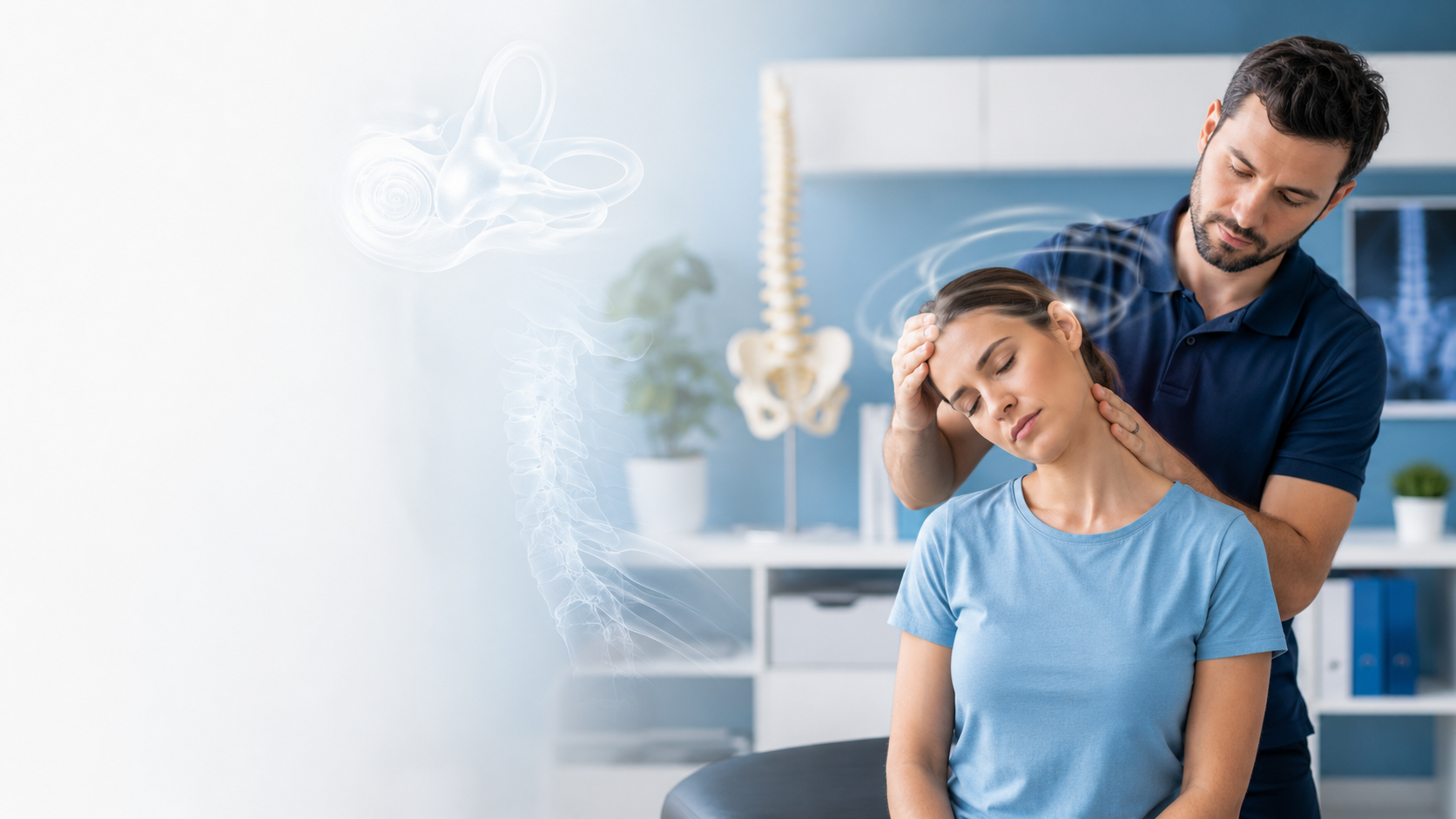

What Is Vertigo?
Vertigo is not a disease. It is a symptom that creates the false sensation that you or your surroundings are moving, spinning, or tilting even though you are standing still. Your balance depends on three major systems working together:- The vestibular system inside the inner ear
- Your vision
- Sensory receptors located in muscles, joints, and the cervical spine
Common Symptoms of Vertigo
Vertigo symptoms vary from person to person and may last for seconds, minutes, or even several hours depending on the underlying condition. Common symptoms include:- A spinning sensation
- Feeling pulled toward one side
- Difficulty maintaining balance
- Nausea or vomiting
- Blurred vision during movement
- Difficulty concentrating
- Motion sensitivity
- Unsteady walking
- Neck discomfort
- Headaches
- Ringing in the ears in certain conditions
Vertigo vs. Dizziness: Understanding the Difference
Many people use the words vertigo and dizziness interchangeably, but healthcare providers separate them because they often point to different causes. Dizziness is a broad symptom that may describe:- Feeling faint
- Lightheadedness
- General imbalance
- Weakness
- Feeling disconnected from your surroundings
- The room spinning
- The floor moving
- Their body rotating
- A constant sensation of motion
What Causes Vertigo?
Vertigo can develop from several different medical conditions. Identifying the underlying cause is the first step toward successful treatment.Benign Paroxysmal Positional Vertigo (BPPV)
BPPV is the most common form of vertigo. It develops when tiny calcium crystals inside the inner ear become displaced and interfere with the body’s balance system. Symptoms usually appear when:- Rolling over in bed
- Looking upward
- Bending down
- Standing quickly
Vestibular Neuritis
Vestibular neuritis occurs when inflammation affects the vestibular nerve, usually after a viral infection. People commonly experience:- Sudden vertigo
- Balance problems
- Nausea
- Difficulty walking
Ménière’s Disease
Ménière’s disease affects the inner ear because of abnormal fluid regulation. Typical symptoms include:- Recurrent vertigo attacks
- Hearing loss
- Ear fullness
- Ringing in the ears
Vestibular Migraine
Some migraine sufferers experience dizziness without a severe headache. Triggers may include:- Bright lights
- Stress
- Hormonal changes
- Lack of sleep
- Certain foods
Cervicogenic Vertigo
Cervicogenic vertigo, sometimes called cervical vertigo, develops when dysfunction in the neck interferes with balance signals reaching the brain. Possible contributing factors include:- Poor posture
- Whiplash injuries
- Cervical joint restrictions
- Muscle tightness
- Degenerative changes
- Long hours using computers
Can Neck Problems Really Affect Balance?
Absolutely. The upper cervical spine contains thousands of specialized sensory receptors called proprioceptors. These receptors continuously tell your brain where your head is positioned in space. When neck joints become stiff, muscles tighten, or injuries alter normal movement patterns, those signals may become inaccurate. Your brain then receives conflicting information from:- The neck
- The eyes
- The inner ear
Can Neck Problems Cause Vertigo?
Yes. Neck dysfunction can contribute to dizziness in certain people. This condition is commonly called cervicogenic dizziness or cervical vertigo. Unlike vertigo caused by the inner ear, this form develops when the muscles, joints, and nerves in the neck send inaccurate position signals to the brain. The brain depends on continuous communication between the eyes, inner ear, and cervical spine to maintain balance. If one of these systems becomes disrupted, the brain may struggle to determine your body’s true position, leading to dizziness, imbalance, or a sensation of movement. This relationship explains why some people notice their symptoms worsen after sitting at a desk for hours, looking down at a phone, or following a neck injury. Understanding the cause of dizziness is essential before deciding on treatment. That is why patients frequently ask, Can a Chiropractor Help With Vertigo, after discovering their symptoms may be connected to neck dysfunction rather than an inner ear disorder.What Is Cervicogenic Vertigo?
Cervicogenic vertigo is a form of dizziness associated with problems in the cervical spine. Rather than originating inside the ear, it develops because the neck cannot accurately communicate head position to the brain. Although researchers continue studying the exact mechanism, most agree that abnormal sensory input from the upper cervical joints and muscles plays a significant role. People with cervicogenic vertigo often experience:- Neck pain or stiffness
- Reduced neck mobility
- Dizziness during head movement
- Poor balance
- Headaches beginning near the base of the skull
- Difficulty focusing while walking
- A sensation of floating or instability
How the Cervical Spine Helps Maintain Balance
The upper neck contains an exceptionally high concentration of proprioceptors. These tiny sensory receptors constantly monitor:- Head position
- Neck movement
- Joint motion
- Muscle tension
- Your eyes
- Your vestibular system
- Your muscles and joints throughout the body
Common Causes of Cervicogenic Vertigo
Several conditions may contribute to neck-related dizziness.Whiplash Injuries
Motor vehicle accidents frequently injure the soft tissues supporting the cervical spine. Even after neck pain improves, altered movement patterns and joint dysfunction may continue affecting balance.Poor Posture
Forward head posture places continuous stress on the cervical spine. Office workers, students, and individuals who spend hours using computers or mobile devices often develop muscle tightness and joint stiffness that may contribute to dizziness over time.Cervical Arthritis
Age-related degeneration can reduce normal joint movement and increase stiffness throughout the neck. Some individuals with cervical osteoarthritis report episodes of dizziness that become worse during neck movement.Muscle Tightness
Overactive muscles surrounding the neck and shoulders may interfere with normal movement while also affecting sensory feedback reaching the brain. Stress, repetitive work, and prolonged sitting commonly contribute to muscular tension.Sports and Workplace Injuries
Athletes and physically demanding occupations expose the cervical spine to repetitive strain. Without proper rehabilitation, lingering dysfunction may continue affecting posture and balance long after the original injury heals.Signs Your Vertigo May Be Coming From Your Neck
Although only a comprehensive examination can identify the true source of dizziness, several symptoms suggest the cervical spine may be involved. These include:- Neck stiffness accompanying dizziness
- Pain between the shoulders
- Symptoms worsening after prolonged sitting
- Headaches beginning near the base of the skull
- Limited neck rotation
- Dizziness during head movement
- Previous whiplash injury
- Symptoms improving after stretching or movement
How Does a Chiropractor Treat Vertigo?
Treatment begins with identifying whether the neck contributes to the patient’s symptoms. At The Active Rehab, chiropractors perform a detailed examination that may include:- Medical history
- Neurological screening
- Orthopedic testing
- Cervical range-of-motion assessment
- Postural evaluation
- Muscle strength testing
- Functional movement analysis
Chiropractic Adjustments
Spinal adjustments are one component of conservative chiropractic care. Using controlled, precise movements, chiropractors restore normal joint motion in restricted spinal segments. Improved joint mobility may help normalize sensory input from the cervical spine, reducing the mismatch between the neck, eyes, and vestibular system. Treatment is always individualized according to the patient’s condition, health history, and examination findings.Soft Tissue Therapy
Neck muscles often become tight after injury or prolonged poor posture. Soft tissue treatment may include:- Myofascial release
- Trigger point therapy
- Instrument-assisted soft tissue mobilization
- Massage techniques
Corrective Exercises
Passive treatment alone rarely provides lasting improvement. Patients usually receive customized exercises designed to improve:- Neck mobility
- Deep neck muscle strength
- Shoulder stability
- Postural endurance
- Balance control
- Coordination
Postural Retraining
Modern lifestyles contribute significantly to cervical dysfunction. Many people spend eight or more hours daily looking down at phones or sitting in front of computers. Small improvements in workstation setup, sitting posture, and movement habits can dramatically reduce ongoing stress placed on the neck. Education is an important part of long-term recovery.What Types of Vertigo Can Chiropractic Care Help?
Not every type of vertigo responds to chiropractic treatment. The greatest benefit is typically seen when dizziness develops because of musculoskeletal dysfunction affecting the cervical spine. Examples include:Cervicogenic Vertigo
This remains the primary condition chiropractors treat. Improving joint movement, muscle function, and posture may reduce dizziness caused by abnormal cervical sensory input.Vertigo After Neck Injuries
Individuals recovering from whiplash or sports injuries sometimes develop persistent dizziness. Restoring normal neck mechanics may improve symptoms as tissues heal.Posture-Related Dizziness
People who spend prolonged periods sitting often develop muscle imbalance and restricted cervical movement. Addressing these mechanical problems may reduce recurring episodes of dizziness.Mixed Conditions
Some patients experience both vestibular disorders and neck dysfunction. Although chiropractic care does not treat inner ear disease itself, addressing cervical dysfunction may improve overall function when combined with vestibular rehabilitation and medical care.What Does Research Say?
Current research suggests that manual therapy and chiropractic care may help reduce symptoms in patients with cervicogenic dizziness by improving cervical mobility and restoring normal proprioceptive function. Several clinical studies have reported improvements in:- Neck pain
- Balance
- Range of motion
- Functional ability
- Frequency of dizziness episodes