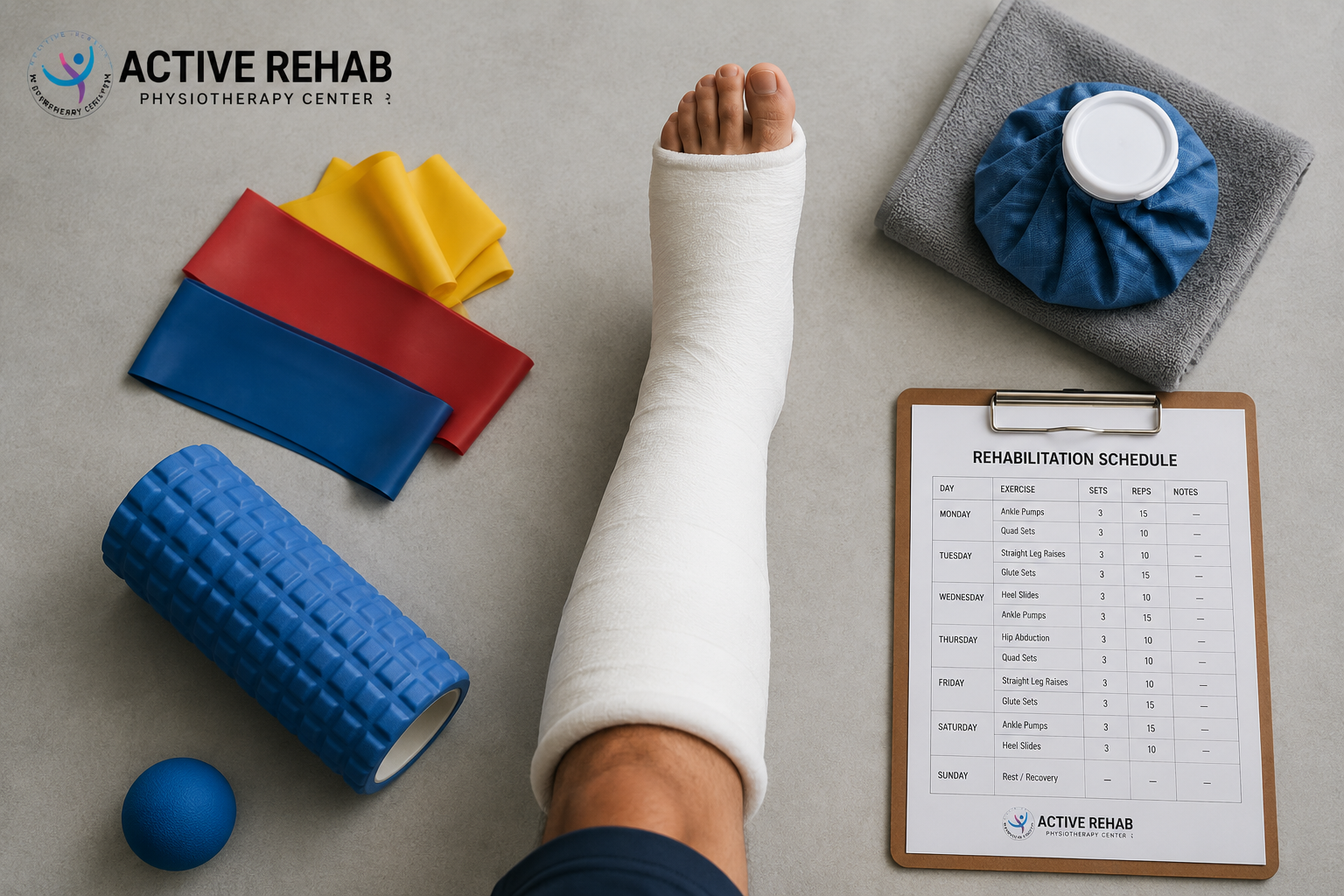
Breaking a leg is one of the most disruptive injuries a person can experience. Whether it happened during a fall, a sports accident, or a road collision, the recovery process goes far beyond the bone simply healing. Once the cast comes off or the surgery is done, the real work begins. Broken leg physiotherapy is what bridges the gap between a healed bone and a fully functional body, and understanding what to expect makes the entire journey far less overwhelming.
What is Broken Leg Physiotherapy?
Broken leg physiotherapy is a structured rehabilitation program designed to restore movement, strength, and function to the leg after a fracture. When a leg is broken, it is typically immobilized for several weeks through casting, bracing, or surgical fixation. During this time, the surrounding muscles weaken significantly, the joints stiffen, and normal movement patterns are lost entirely.Physiotherapy after a broken leg addresses all of these issues in a deliberate, progressive way. A qualified physiotherapist assesses your current level of mobility, pain, and muscle function, then builds a recovery plan specific to your injury type and overall health.The role of physiotherapy extends well beyond just getting you walking again. It focuses on restoring the full range of motion in your ankle, knee, and hip, rebuilding muscle strength that was lost during immobilization, improving balance and coordination, and reducing the risk of long-term complications like chronic stiffness, joint pain, or abnormal walking patterns.Without proper rehabilitation, many people find themselves months after a fracture still limping, still experiencing stiffness, or compensating with other parts of the body in ways that cause secondary injuries. That is why leg fracture rehab is considered just as important as the initial medical treatment.
Is Broken Leg Physiotherapy Painful?
This is one of the most common concerns people have before starting rehabilitation, and it deserves an honest answer. Yes, physiotherapy after a broken leg can be uncomfortable, particularly in the early sessions. However, there is an important difference between the discomfort of healing and the sharp pain of re-injury.Most people describe early physiotherapy sessions as producing a dull aching sensation, tightness, or a burning feeling in the muscles. This happens because tissues that have been completely still for weeks are suddenly being asked to move again. The joints are stiff, the muscles are weak and sensitive, and even gentle exercises can feel surprisingly difficult.The key distinction your physiotherapist will help you understand is this: working through mild to moderate discomfort during controlled movement is expected and necessary. Pain that is sharp, sudden, or worsening with each session is a signal to stop and communicate with your therapist immediately.It is also worth knowing that physiotherapy painful experiences tend to be most prominent in the first one to two weeks of starting. As the tissues gradually loosen and the muscles regain some strength, the discomfort noticeably reduces. Most patients report that by the third or fourth week of consistent sessions, movement begins to feel more natural and considerably less uncomfortable.
Why Physiotherapy Can Feel Painful
Understanding why physiotherapy feels uncomfortable helps remove the fear associated with it. There are several well-established reasons why the body resists movement after a fracture.Muscle stiffness after immobilization is the most immediate cause of discomfort. When a muscle is not used for several weeks, it loses flexibility and becomes tight. Moving that muscle back through its normal range of motion creates resistance and a stretching sensation that can feel painful.Joint tightness after casting is another significant factor. The ankle joint in particular tends to become very stiff after being enclosed in a cast. The capsule around the joint contracts slightly over time, meaning that moving it through its full range requires deliberate effort and produces discomfort until it loosens.Muscle weakness from inactivity makes even simple exercises feel exhausting and sometimes painful. When muscles are weak, they fatigue quickly and produce a burning or aching sensation during use. This is normal muscle fatigue, not damage.Scar tissue formation occurs around the fracture site and in the surrounding soft tissues. This scar tissue is less flexible than healthy tissue and can create a pulling or tight sensation during movement, especially in the early weeks of rehabilitation.Controlled movement discomfort is also a natural part of physical rehabilitation. The body interprets new or returning movement as an unfamiliar stimulus, and this triggers nerve signals that register as discomfort. With repetition, the nervous system adapts and the sensation diminishes.The first few sessions will always feel harder than the sessions that follow. This is not a sign that physiotherapy is making things worse. It is a sign that the body is being challenged in the way recovery requires.
Broken Leg Physiotherapy Recovery Stages
Recovery after broken leg physiotherapy follows a broadly predictable progression, though timelines vary depending on fracture severity, age, and individual health factors.
Early Stage: Weeks 0 to 2
The primary focus in the earliest stage of recovery is controlling swelling, managing pain, and beginning very gentle movement. At this point, the bone may still be in the later stages of healing, so exercises are low-impact and carefully chosen. Ankle pumps, gentle range of motion movements, and basic muscle activation exercises are common. Ice therapy is frequently used after sessions to reduce inflammation. The goal is not strength at this point but simply waking the tissues up and maintaining circulation.
Middle Stage: Weeks 2 to 6
As healing progresses, the rehabilitation program becomes more active. Strength rebuilding becomes a priority, along with improving the range of motion in the affected joints. Patients typically begin assisted walking during this phase, often with a crutch or walking frame for support. Weight bearing is introduced gradually, with the amount of pressure placed through the leg increasing week by week under therapist supervision. Exercises become more varied and slightly more demanding. Many patients at this stage benefit from a comprehensive rehabilitation environment such asThe Active Rehab where multiple recovery services are coordinated under one roof.
Late Stage: Weeks 6 and Beyond
The final phase of broken leg recovery physiotherapy focuses on restoring full functional independence. This includes full mobility training, balance and proprioception exercises, stair climbing, and gait re-education to correct any compensatory walking patterns that developed during recovery. By the end of this stage, most patients are walking without assistance, returning to daily activities, and beginning light recreational exercise if appropriate.
Exercises Used in Broken Leg Physiotherapy
Fracture physiotherapy exercises are carefully selected to match the stage of recovery. Here are the most commonly used exercises and what each one accomplishes.Ankle pumps involve flexing the foot up and down in a slow, rhythmic motion. They are usually introduced immediately after cast removal to restore ankle movement and stimulate circulation.Quad sets involve tightening the thigh muscle while the leg is extended flat. This activates the quadriceps without placing stress on the fracture site and is one of the safest early strengthening exercises.Heel slides are performed lying down, slowly sliding the heel toward the body to bend the knee. This improves knee range of motion and gently works both the hamstring and quadriceps.Straight leg raises involve lifting the straight leg to about forty-five degrees while lying down. This builds quadriceps and hip flexor strength and is a foundational exercise in most leg fracture rehab programs.Resistance band exercises are introduced in the middle and later stages to build strength in the ankle, calf, and hip muscles. The resistance can be gradually increased as strength improves.Balance board training is used in the later recovery stage to rebuild proprioception, which is the body’s sense of where it is in space. This is essential for preventing future falls and restoring confident movement.Gait re-education involves the therapist observing and correcting the way a patient walks, addressing any limping, uneven weight distribution, or compensatory patterns that developed during recovery. Patients recovering from complex fractures sometimes find that combining gait training with chiropractic care helps address spinal and postural imbalances that develop during the recovery period.
How to Reduce Pain During Physiotherapy
Managing discomfort effectively during rehabilitation makes the process far more sustainable and helps patients stay consistent with their program.Starting each session with a gentle warm-up, whether that is light movement, heat application, or gentle manual therapy, prepares the tissues for exercise and reduces the intensity of discomfort during the session itself.Gradual progression is the most important principle in reducing pain. A well-structured rehabilitation plan increases the difficulty of exercises incrementally rather than jumping ahead too quickly. Staying within your current capacity and building on it steadily is far more effective than trying to accelerate recovery through pushing through excessive pain.Applying ice for fifteen to twenty minutes after a physiotherapy session significantly reduces post-exercise soreness and swelling. This is a simple and highly effective recovery tool.Focused breathing during exercises helps the nervous system relax and reduces the perception of pain. Taking slow, deliberate breaths rather than holding the breath during movement makes a measurable difference in how discomfort is experienced.Consistency is perhaps the most underrated pain management tool. Patients who attend sessions regularly and complete their home exercises find that discomfort reduces much faster than those who attend irregularly. Muscle stiffness after injury tends to return between sessions when exercises are skipped.Soft tissue tightness and post-session soreness are also commonly managed throughregistered massage therapy, which helps improve circulation, reduce muscle tension, and support the overall recovery process between physiotherapy sessions.
How Long Does Broken Leg Physiotherapy Take?
The honest answer is that it depends on the nature of the fracture and the individual. However, standard rehabilitation timelines give a useful framework.For mild fractures without surgical intervention, the active physiotherapy phase typically runs from six to eight weeks, with most patients achieving functional independence within three months of starting rehabilitation.For fractures that required surgery, such as those involving plates, screws, or rods, the rehabilitation period is typically longer. Active physiotherapy often continues for ten to twelve weeks, with full recovery taking anywhere from four to six months.For severe trauma cases involving multiple fractures or significant soft tissue damage, the timeline extends further. In these situations, recovery can take six months to a year, with physiotherapy playing an ongoing role throughout.It is important to understand that the bone healing timeline and the rehabilitation timeline are not the same thing. A bone may be structurally healed at eight weeks, but the surrounding muscles, joints, and movement patterns can take significantly longer to fully recover.
When to Stop Physiotherapy After a Broken Leg
Physiotherapy is considered complete when several key milestones are reached. These include the full return of strength in the affected leg, pain-free movement through the complete range of motion, the ability to walk, climb stairs, and perform daily activities without discomfort or compensation, and formal clearance from both the physiotherapist and the treating doctor.Functional independence, meaning the ability to live your normal life without modifications or limitations, is the ultimate goal of post fracture recovery. Once that is achieved and sustained consistently over time, most patients are discharged from active physiotherapy with a home maintenance program to follow independently.
Tips for Faster Recovery
Recovery speed is influenced by factors both within and outside of physiotherapy sessions.Nutrition plays a significant role in how quickly bone and soft tissue heal. Adequate calcium and vitamin D support bone repair, while sufficient protein intake supports muscle rebuilding. Eating a balanced, nutrient-rich diet throughout recovery is not optional but genuinely impacts outcomes.Hydration keeps the tissues supple and supports the cellular processes involved in healing. Dehydration increases muscle cramping and fatigue during exercise sessions.Sleep is when the majority of tissue repair occurs. Getting consistent, quality sleep throughout the recovery period is one of the most powerful and most frequently underestimated recovery tools available.Avoiding overuse between sessions matters too. Doing too much activity between physiotherapy appointments can cause setbacks by inflaming tissues before they have recovered from the previous session.Some patients also find that incorporatingacupuncture treatmentinto their overall recovery plan helps manage residual pain and supports the nervous system during the more demanding phases of rehabilitation.Following the therapist’s plan precisely and resisting the urge to self-prescribe extra exercises or skip prescribed ones is essential. The program is designed with intentional progression, and deviating from it disrupts that progression.
Common Mistakes During Broken Leg Physiotherapy
Several common errors slow recovery significantly. Skipping sessions is perhaps the most damaging mistake. Progress in rehabilitation is cumulative, and missing sessions interrupts the adaptation process that tissues need to heal properly.Rushing recovery by trying to do too much too soon is a close second. Pushing the leg harder than the therapist recommends increases the risk of re-injury, swelling, and pain flare-ups that set recovery back by weeks.Avoiding movement due to fear of pain is understandable but counterproductive. Movement, within safe and guided limits, is what drives recovery. Remaining passive because of pain anxiety leads to prolonged stiffness and muscle weakness.Ignoring early pain signals and continuing through sharp or unusual pain is dangerous. This type of pain is the body’s way of communicating that something is wrong and needs to be addressed.Not completing home exercises between sessions is one of the most common reasons rehabilitation takes longer than expected. Sessions with a physiotherapist alone are not sufficient for full recovery. The work done at home between appointments is what sustains progress.
Frequently Asked Questions
Is physiotherapy painful after a broken leg?
Physiotherapy after a broken leg is often uncomfortable, particularly in the early sessions. The discomfort typically comes from stiff joints and weak muscles being reactivated. It is generally described as a dull ache or tightness rather than sharp pain, and it reduces significantly after the first two to three weeks of consistent sessions.
How long does broken leg physiotherapy take?
For most people, active physiotherapy runs for six to twelve weeks depending on fracture severity. Full recovery, including the return of strength and normal walking patterns, typically takes three to six months.
What exercises are best after a fracture?
The most effective exercises in the early stages include ankle pumps, quad sets, heel slides, and straight leg raises. As recovery progresses, resistance band work, balance training, and gait re-education are introduced to restore full function.
Can I walk during physiotherapy?
Yes, in most cases walking is introduced progressively during the middle stage of rehabilitation, usually with assistance such as crutches. The amount of weight placed through the leg increases gradually as strength and healing allow.
Why does physiotherapy hurt at first?
Early physiotherapy discomfort comes from muscles that have weakened and stiffened during immobilization, joints that have tightened, and scar tissue that restricts movement. As tissues adapt and strengthen over the first few weeks, this discomfort reduces noticeably.
When can I return to normal walking?
Most people with straightforward fractures return to unassisted, normal walking within eight to twelve weeks of starting rehabilitation. More complex injuries may take longer. Your physiotherapist and doctor will confirm when it is safe based on your individual progress.